
丨
English
Views: 0 Author: Site Editor Publish Time: 2026-10-13 Origin: Site


Bridging the gap between casting and machining is an absolute necessity. Raw steering knuckles straight from the mold are simply not ready for the CNC machine. Poor preparation inevitably leads to accelerated tool wear. You will also face high scrap rates and catastrophic field failures. We must address the procurement and engineering reality head-on. The quality of final machined steel castings depends entirely on the thermal and physical conditioning applied. This exact conditioning must occur long before the first metal cut is made. We will outline how rigorous pre-machining protocols protect your manufacturing timeline. You will learn how these steps ensure the structural integrity of critical automotive components. Furthermore, we explore how proper evaluation secures heavy-duty agricultural parts. Discover the vital strategies necessary to transform raw metal blanks into reliable, precision-engineered products.
Proper heat treatment stabilizes the microstructure of **steel castings**, preventing warpage during heavy machining.
Aggressive surface descaling eliminates hard spots that cause unpredictable CNC tool breakage.
Non-Destructive Testing (NDT) prior to machining ensures you do not waste manufacturing hours on structurally compromised blanks.
Establishing precise datum points is critical for accurate fixturing, especially for complex **custom steel casting parts**.
You face severe operational risks when machining unprepared castings. Skipping proper preparation ruins expensive carbide tooling rapidly. It also creates out-of-tolerance dimensions during final inspection. When internal stresses release during cutting, the metal twists. This movement ruins critical geometric tolerances instantly. Delayed production runs quickly eat into profit margins. Operators lose valuable spindle time troubleshooting unpredictable material behaviors. We frame this problem around factory floor realities. Unprepared blanks act as a major bottleneck for any machine shop.
You need clear success criteria before approving a batch for machining. A casting becomes truly machining-ready only when it meets specific metrics. We look for highly consistent hardness across the entire geometry. The blank must possess a completely clean, scale-free exterior. Dimensional stability remains absolutely non-negotiable for holding tight tolerances. If a knuckle fails any of these criteria, reject it. Foundries must guarantee these baseline properties before shipping.
We acknowledge a stark cost versus outcome reality here. Advanced preparation steps do add upfront lead time. However, they drastically reduce the total cost-per-part downstream. You minimize unexpected scrap rates significantly. We also eliminate costly rework hours on the shop floor. Investing in rigorous foundry preparation always pays off. It protects your downstream assembly schedules efficiently. Buyers should never compromise on pre-machining conditioning.
The core purpose of heat treatment is microstructural stabilization. The casting process introduces massive internal stresses. Molten metal solidifies at uneven cooling rates inside the mold. Thin sections cool rapidly while thick sections remain hot. This dynamic creates microscopic structural tension throughout the knuckle. We must resolve these stresses completely before any cutting begins. Unrelieved tension causes severe warping during heavy metal removal. A perfectly round bearing bore will quickly turn oval.
Foundries rely on several standard approaches to condition the metal. They tailor these thermal cycles specifically for Steel Castings. Each method targets a distinct engineering outcome.
Normalizing: We heat the metal above its critical temperature. Air cooling then refines the internal grain structure. This produces a highly uniform hardness for predictable cutting.
Annealing: We use slow furnace cooling to soften the material. It dramatically improves overall machinability and extends tool life.
Quenching and Tempering: Steering applications require high-load resilience. This process achieves specific mechanical properties. We balance high ultimate tensile strength against necessary ductility.
Inconsistent heat treatment poses a massive implementation risk. Poor thermal control leads to unpredictable tool life. CNC operators struggle constantly across a single production run. Hard spots chip inserts, while soft spots cause material smearing. Foundries must maintain strict calibration of their industrial furnaces.
Table 1: Comparison of Heat Treatment Methods for Steel Castings
Treatment Process | Cooling Method | Primary Objective | Ideal Machining Outcome |
|---|---|---|---|
Normalizing | Ambient air cooling | Refine grain structure | Uniform hardness across complex geometries |
Annealing | Controlled furnace cooling | Maximum material softening | Extended CNC tool life and faster feed rates |
Quenching & Tempering | Rapid liquid quench, then reheat | High strength and toughness | Ready for final precision grinding |
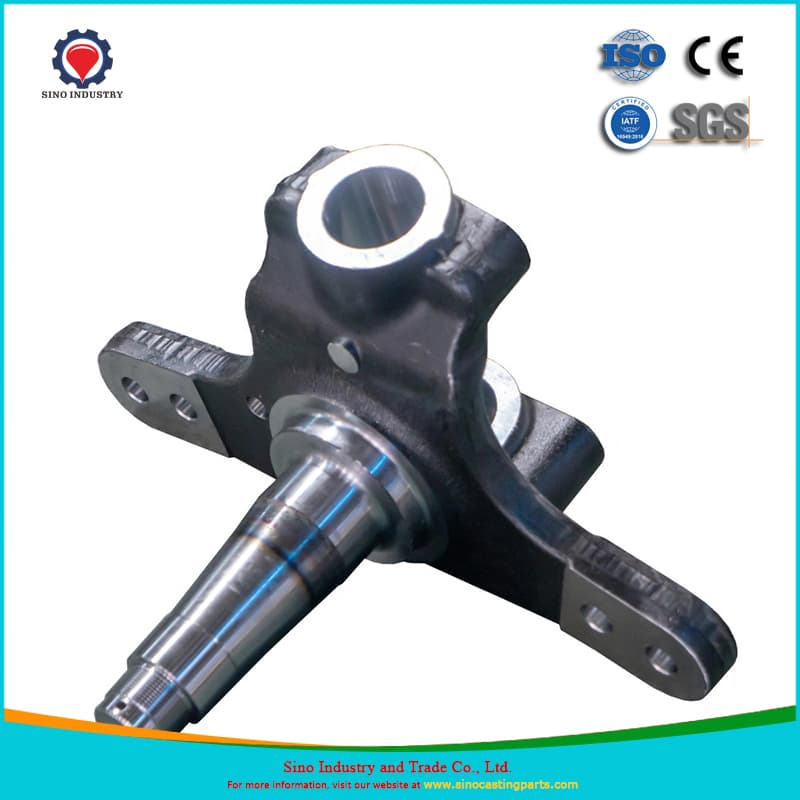
Burned-in sand acts as a severe hazard. Heavy scale and thick oxide layers form during the cooling phase. Silica sand often fuses directly to the molten metal surface. These external layers act as highly aggressive abrasives. They quickly destroy expensive CNC cutting inserts. Operators will notice excessive tool chatter immediately. We must eliminate this abrasive hazard entirely before machining starts.
Removal methods focus heavily on aggressive mechanical abrasion. We rely primarily on industrial shot blasting equipment. Steel grit impacts the casting at high velocities. Sandblasting also helps achieve a uniform, bare-metal surface. These methods strip away all oxides and residual mold sand. The resulting surface finish dictates how cleanly a tool enters the cut.
Foundries use strict evaluation metrics before releasing parts. We demand specific surface finish grades from the supplier. ISO standard SA 2.5 is a common baseline requirement. SA 2.5 represents a near-white metal blast cleaning standard. This ensures the raw part is completely free of surface contaminants. Machine shops should routinely verify this finish upon receipt.
Clean surfaces are absolutely critical for quality control. They make inspecting custom steel casting parts much more accurate. Inspectors need bare metal to spot micro-cracks properly. Dirt and scale easily hide fatal casting defects. Clean components move into the machining queue safely and efficiently.
Quality assurance demands one fundamental rule of thumb. Never machine a bad casting under any circumstances. It wastes valuable spindle time and operator labor. We must screen for fatal defects as early as possible. A steering knuckle operates under constant dynamic stress. A single internal void can cause catastrophic vehicle failure.
Testing dimensions cover both surface and internal integrity. We deploy several technologies to verify the raw blank.
Magnetic Particle Inspection (MPI): Technicians apply a strong magnetic field to the part. Iron powder gathers visibly at any micro-cracks. We use this to detect surface and near-surface discontinuities efficiently.
Ultrasonic Testing (UT): Sound waves bounce off internal voids. The equipment displays the exact depth of the flaw. We identify internal shrinkage quickly.
X-Ray Radiography: We capture an internal map of the solid metal. This reveals deep porosity hidden from the naked eye. It ensures the steering knuckle survives extreme dynamic loads.
Compliance builds necessary trust in the automotive supply chain. We frame these testing steps around strict industry safety standards. ASTM E446 and ISO guidelines dictate clear acceptance criteria. Rigorous NDT remains completely non-negotiable for critical steering components. You cannot bypass this step safely. Certified reports prove the physical integrity of every batch.
Steering knuckles present a major technical challenge for machinists. They possess highly irregular, asymmetrical shapes. You cannot simply clamp them in a standard vise. CNC machines require perfect, repeatable alignment every single time. You need this stability to hold incredibly tight tolerances. Any variation in clamping pressure distorts the final dimensions.
Datum targeting solves this complex fixturing problem perfectly. Foundries cast specific reference points directly into the raw part. We call these distinct features datum targets. They are usually small, flat machined pads or locating pins. They ensure consistent clamping across hundreds of duplicate parts. Engineers use the 3-2-1 principle to lock the component in space. Three points define a plane. Two points define a line. One point dictates the final stop axis.
Consider targeted applications in the heavy machinery sector. We see this extensively in custom steel castings for tractor steering knuckles. Heavy-duty agricultural applications require massive structural parts. They must be perfectly aligned for axle and tie-rod machining. Missing a datum point ruins the entire assembly geometry. Proper datum design bridges the gap between foundry and factory.
Procurement teams need strong shortlisting logic today. Engineering teams should jointly audit a foundry’s pre-machining processes. You must verify their actual prep capabilities firsthand. Do not rely solely on marketing brochures. A supplier is only as good as their quality control.
Use this strict checklist for evaluation:
Do they possess in-house heat treatment capabilities? This helps maintain a highly secure chain-of-custody.
Do they provide certified NDT reports prior to shipment?
Do they utilize automated shot blasting for consistent surface finishes?
Can they deliver semi-finished or fully machined components? Capable foundries consolidate steps to reduce your supply chain complexity.
Take decisive next-step action during vendor selection. Encourage buyers to request detailed process flowcharts early. Always demand sample first-article inspection (FAI) reports. FAI proves their preparation process is stable and repeatable. A thorough audit prevents expensive surprises during production runs. Choose a partner committed to total part conditioning.
The ultimate reliability of a steering knuckle is forged early. It happens in the preparation phase between the mold and the mill. We must resolve thermal stresses and clean abrasive surfaces strictly. Proper NDT screening prevents catastrophic field failures effectively. Establishing precise datum targets guarantees repeatable CNC machining success.
Buyers must look far beyond the basic raw material price. Evaluate the thoroughness of the foundry's preparation processes instead. Poor prep always costs significantly more in the long run. Rework, scrap, and broken tooling destroy project budgets rapidly. Secure your supply chain by demanding rigorous conditioning.
Take action on your next manufacturing project today. Submit your 3D CAD models to a qualified casting partner. Provide your technical drawings to assess manufacturability early. We can help you determine the exact preparation requirements needed.
A: Residual internal stresses cause the part to warp as material is removed. Surface scale will also destroy expensive cutting tools instantly. Proper heat treatment relieves tension, while aggressive shot blasting removes abrasive oxides before cutting begins.
A: Hardness targets are heavily dependent on the specific alloy used. Parts are typically normalized or annealed to a specific Brinell Hardness Number (BHN). This precise range perfectly balances efficient machinability with the final component strength required for safety.
A: 3D printed sand molds create highly accurate raw castings. They deliver significantly better surface finishes right out of the mold. This slightly reduces the aggressive descaling and prep time needed before entering the machining center.


