
Views: 0 Author: Site Editor Publish Time: 2026-08-31 Origin: Site


Engineers and procurement teams face a constant, difficult challenge today. They must precisely balance component cost against long-term mechanical performance. Specifying the wrong casting material often leads to premature failure in the field. It can also cause excessive machining costs or unnecessary over-engineering. While newer synthetic alloys certainly exist, gray iron remains a highly foundational engineering material. It delivers unparalleled vibration damping and excellent machinability for heavy equipment. It also offers extreme cost-effectiveness when you choose the correct grade and the right foundry partner. This guide strips away the usual marketing fluff. We provide a practical, evidence-based framework to help you evaluate and source these materials. You will learn how to specify Gray Iron Castings for demanding industrial applications. We cover critical material properties, manufacturing processes, and supplier selection tips to ensure your project succeeds.
Optimal Use Cases: Gray iron is highly effective for components requiring vibration damping, thermal stability, and wear resistance (e.g., machine bases, engine blocks, pump housings).
Material Limitations: It has low tensile strength and ductility compared to ductile iron; it is not suitable for high-impact or high-tensile load applications.
Specification Matters: Selecting the correct standard (e.g., ASTM A48 Classes 20 through 60) directly dictates the balance between machinability and tensile strength.
Supplier Impact: A successful rollout depends heavily on a foundry’s ability to control cooling rates and metallurgical composition to prevent shrinkage and internal porosity.
Gray iron stands out in the metallurgical world due to its highly unique internal structure. As the molten metal cools, carbon precipitates out of the solution. It forms into distinct, interconnected graphite flakes. These flakes weave irregularly through the metallic iron matrix. This specific flake structure behaves fundamentally differently from the continuous matrix of standard steel. The graphite flakes intentionally disrupt the continuity of the metal. They provide the alloy with distinct mechanical advantages and specific physical limitations. Understanding this microscopic arrangement helps you apply the material correctly in real-world designs.
Engineers consistently choose this material to achieve three specific, measurable outcomes in their designs.
Vibration Damping: The internal graphite flakes absorb and dissipate mechanical vibrations effectively. They outperform standard steel significantly in specific damping capacity. This characteristic makes the material absolutely critical for precision CNC machinery bases, gearboxes, and automotive suspension components. It stops tool chatter and prevents resonant frequencies from destroying delicate equipment.
Machinability: Tooling costs drop dramatically when machining this alloy. The embedded graphite acts as a natural, solid dry lubricant during cutting operations. It also serves as an effective chip breaker. It snaps the metal chips into small, manageable pieces instead of forming long, stringy tangles. This reduces overall machining time, prevents tool fouling, and extends the lifespan of expensive carbide inserts.
Thermal Conductivity & Wear Resistance: The matrix handles sudden thermal shock very well. It also resists surface galling under severe sliding friction. Heat dissipates rapidly through the graphite network. Engine blocks, disc brake rotors, and heavy-duty clutches benefit greatly from these thermal and frictional properties.
We must acknowledge the structural limitations of this metal candidly. The exact same graphite flakes providing excellent damping also create severe stress concentration points. The sharp edges of these microscopic flakes act as internal notches. When you apply tensile stress, these points cause microscopic internal tearing. This phenomenon results in inherent brittleness, virtually zero elongation, and very low impact resistance. Therefore, engineers must avoid using Gray Iron Castings for high-impact applications or components subjected to heavy bending forces.
Choosing between the two most common cast iron alloys requires careful upfront analysis. You must evaluate your core mechanical requirements against your project budget allocations. We strongly advise against guessing when structural integrity is at stake. Analyze the physical loads your component will experience in the field. If the part must endure sudden shocks or severe bending, you need different properties than a part simply resting under massive static weight. You must weigh functional necessity against manufacturing feasibility.
To simplify the engineering choice, we can examine three primary dimensions. These factors usually dictate the final material specification.
Table 1: Material Performance and Application Matrix
Comparison Dimension | Gray Iron Characteristics | Ductile Iron Characteristics |
|---|---|---|
Strength & Ductility | Best for compressive loads. Very brittle under tension. Fails without yielding. | Superior yield strength. Excellent impact resistance. Bends before breaking. |
Cost Efficiency | Generally cheaper to cast. Significantly faster and easier to machine. | Higher initial casting expenses. Slower machining speeds required. |
Vibration Control | Vastly outperforms in dampening mechanical noise and operational vibration. | Lower damping capacity because carbon forms nodules, not flakes. |
You should specify gray iron when rigidity, compressive strength, and cost control are prioritized over impact resistance. If your design primarily faces steady compressive demands, this material excels. A heavy pump housing or a massive machine bed represents the perfect use case. It keeps production costs remarkably low. However, if your part requires high elongation, must survive heavy crane impacts, or operates under cyclical tensile fatigue, you must select ductile iron instead.
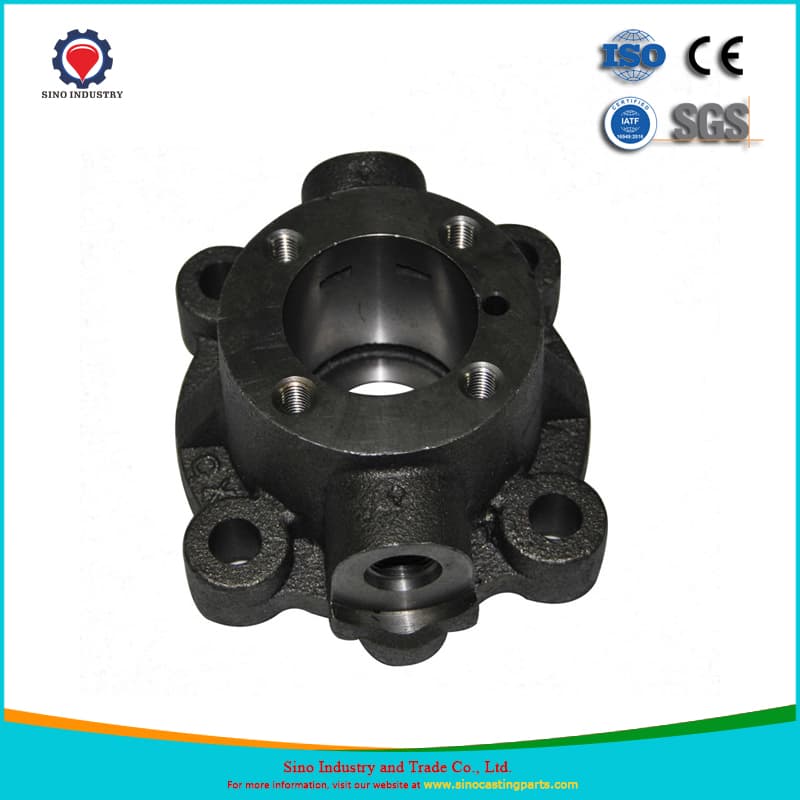
The globally recognized ASTM A48 standard classifies this metal primarily by its minimum tensile strength. The system is straightforward and logical for engineers to navigate. The class number directly corresponds to the strength requirement. For example, Class 20 guarantees a minimum tensile strength of 20,000 psi. Class 30 guarantees 30,000 psi. Foundries verify these properties by pouring separate test bars alongside your actual components. You select the appropriate class based strictly on your calculated load capacities.
Different classes serve vastly different industrial purposes. You must align the grade with your specific operating environment.
Lower Grades (Class 20-30): These grades feature a high carbon equivalent. They offer the absolute best machinability and the highest thermal shock resistance. They also represent the lowest cost option per pound. They work ideally for standard motor housings, heavy counterweights, and simple protective covers.
Higher Grades (Class 40-60): These grades contain a noticeably lower carbon equivalent. They deliver much higher tensile strength and a denser matrix. However, they suffer from significantly lower machinability. Manufacturers use them for heavy-duty drive gears, massive diesel engine blocks, and high-pressure hydraulic cylinders.
Many design engineers fall into a very common, expensive specification trap. They assume higher strength is always better for reliability. This assumption is completely incorrect for this material. Increasing the strength by moving to a higher class negatively affects other critical properties. It inversely lowers both your machinability and your vital damping capacity. You should specify only the exact baseline strength required for your application. Over-specifying will simply waste machining money, rapidly destroy your tooling, and eliminate the acoustic damping traits you originally wanted.
Foundries employ various sand molding techniques based on production volume and geometric complexity. Green sand casting remains the most popular and traditional choice. It utilizes moist, clay-bonded sand. It supports high-volume automated production and offers excellent economies of scale. Conversely, resin sand casting utilizes chemical binders to cure the mold into a rigid block. This method provides much tighter dimensional tolerances. It handles complex internal geometries far better, though it costs slightly more per unit.
We must tightly control several manufacturing risks to ensure reliable, safe parts.
Section thickness directly dictates the cooling rate inside the sand mold. Thin sections or fins cool very rapidly. This rapid cooling risks creating hard, brittle white iron instead of the desired gray structure. If white iron forms, machining becomes nearly impossible. Conversely, very thick sections cool too slowly. This slow cooling produces massive graphite flakes, which can dangerously reduce overall tensile strength.
Foundries also constantly battle internal porosity and shrinkage cavities. Modern facilities mitigate these risks using advanced gating and risering techniques. They rely heavily on sophisticated solidification modeling software, like MAGMASOFT. These digital tools accurately simulate the pour before workers melt any physical metal. They help engineers spot potential hot spots and cold shuts early. This ensures you receive dense, sound components every single time.
You must actively align your production volumes with the correct pattern tooling strategy. Wooden patterns work perfectly well for low-volume runs or early prototypes, but they degrade quickly under heavy use. Aluminum or cast iron patterns cost significantly more upfront. However, they survive tens of thousands of automated molding cycles without losing dimensional accuracy. Evaluate your long-term market demand honestly. Match your pattern tooling lifespan and automated molding capabilities to your true production needs to avoid costly retooling later.
Evaluating a potential foundry requires looking far beyond the simple per-pound quoted price. Procurement and engineering teams must rigorously verify technical competence. They need a manufacturing partner capable of delivering consistent metallurgical quality across every single batch over several years. A cheap price means nothing if the parts arrive full of hidden internal voids or varying hardness levels.
Use this structured checklist when auditing potential suppliers for your next major project.
In-House Metallurgy & Testing: Do they operate calibrated on-site spectrometers? They must perform rigorous tensile and hardness testing directly per ASTM standards. Ask to see their laboratory setup.
Value-Added Services: Look for in-house CNC machining capabilities. Finding a foundry that also machines the parts eliminates finger-pointing over dimensional defects. Heat treating options, like thermal stress relieving, reduce supply chain friction. Surface finishing services also save lead time.
Compliance & Traceability: Insist on viewing current ISO 9001 certifications. Request comprehensive material test reports (MTRs) for your future shipments. Ask to review their documented scrap-rate controls and corrective action procedures.
Prepare a highly comprehensive Request for Quote (RFQ) to start the sourcing process correctly. Include accurate 3D CAD models and fully dimensioned 2D drawings. Provide accurate weight estimates, surface finish requirements, and clear annual volume projections. Most importantly, clearly state your specific ASTM grade requirements on every drawing. Providing complete data upfront ensures the foundry provides an accurate, actionable, and legally binding proposal.
In summary, Gray Iron Castings remain a highly relevant, highly cost-efficient solution today. They excel spectacularly in specific applications dominated by massive compressive loads and heavy mechanical vibrations. Despite the rise of modern synthetics, no other metal perfectly balances machinability, damping, and low cost quite like this one.
Successful implementation requires careful, deliberate engineering planning. You must match the right ASTM grade exactly to your application's operational demands. Avoid the temptation to over-specify strength. You also need to partner with a transparent, data-driven foundry capable of proving their metallurgical consistency through rigorous testing.
Take the next logical step toward optimizing your heavy component production. Submit your 3D models or 2D engineering drawings to our technical team today. We offer a thorough manufacturability review, structural consultation, and a streamlined direct RFQ process to fully support your next manufacturing project.
A: Welding this material is extremely difficult and generally not recommended for structural field repairs. The high carbon content causes severe brittleness near the weld zone. If welding is absolutely necessary, it requires specialized high-temperature pre-heating and incredibly slow post-weld cooling. For critical load-bearing components, replacing the broken part is much safer and usually more economical than attempting a risky weld repair.
A: Yes, the untreated surface oxidizes rapidly when exposed to environmental moisture. Interestingly, this initial layer of surface rust often acts as a minor protective barrier against deeper structural corrosion. To prevent rusting entirely, manufacturers apply standard protective coatings. Common industrial solutions include rust-preventative dipping oils, epoxy primers, durable powder coating, or specialized plating depending on the final environment.
A: Section thickness directly influences the internal cooling rate, which engineers call the mass effect. Thicker sections cool much slower than thinner areas. This prolonged cooling produces significantly larger graphite flakes and a softer internal iron matrix. Consequently, a massively thick section will yield a noticeably lower tensile strength than a standard test bar poured from the exact same batch of metal.
A: Generally, no. Most industrial components function perfectly well in their standard as-cast condition. The material already possesses excellent baseline properties without extra thermal processing. However, manufacturers sometimes apply a low-temperature thermal stress-relieving treatment. They do this strictly for high-precision machine components to ensure internal dimensional stability before final CNC machining. This simply prevents the part from warping during heavy cutting operations.


