
Views: 0 Author: Site Editor Publish Time: 2026-10-25 Origin: Site


Yes. CNC machining is not only possible but typically required to prepare aluminum blanks for complex equipment assembly. Manufacturers frequently ask how to bridge the gap between raw material strength and absolute dimensional precision. You need robust components to withstand heavy dynamic loads. At the same time, you need exact fits for seamless mechanical integration.
While the forging process provides near-net shape and superior structural integrity, it has distinct limitations. It cannot achieve the micron-level tolerances required for modern machinery. Furthermore, it cannot create threaded holes or perfectly flat mating surfaces directly from the die. Relying solely on casting leads to porosity and eventual structural failure. Conversely, pure billet machining wastes valuable material and compromises internal grain strength.
This article evaluates the technical viability and manufacturing risks of utilizing machined blanks over traditional methods. We will explore how dual-process manufacturing impacts high-stress assemblies. Read on to discover actionable steps for integrating this hybrid approach into your production line.
Combining forging and CNC machining yields parts with uninterrupted grain flow and exact assembly tolerances.
The primary implementation risk is part distortion caused by residual stresses during the machining process; proper heat treatment (e.g., T6) is mandatory.
Transitioning to this dual-process method is most cost-effective for high-stress applications (like heavy equipment) at medium-to-high production volumes.
Sourcing both processes under one roof significantly reduces supply chain friction and tolerance stack-up errors.
Engineers face a constant dilemma when selecting manufacturing methods for critical components. We must frame the problem clearly. Billet CNC machining yields exceptionally high precision. However, it wastes massive amounts of raw material. Aerospace and heavy industry components often see buy-to-fly ratios of five to one. You pay for raw stock only to turn eighty percent of it into metal chips. More importantly, milling a solid block severs the internal grain structure. This creates inherent weak points. Components manufactured this way lack optimal fatigue strength. They cannot survive endless loading cycles.
Casting presents an alternative approach. It remains highly cost-effective at scale. You pour molten metal into a mold rapidly. Unfortunately, casting introduces severe microstructural risks. Micro-voids and porosity form naturally as the liquid metal cools. These tiny air pockets act as stress concentrators. They invite structural failure under dynamic loads. High-stress environments destroy cast components quickly.
The hybrid solution bridges this engineering gap perfectly. Combining both processes solves the manufacturing dilemma. Forging establishes the core "skeleton" of the part. The extreme pressure aligns the internal grain structure. This dictates overall strength and rough shape. Subsequent CNC machining finalizes the "joints". High-speed endmills cut the mating faces. Rigid tapping cycles drill the precise mounting holes.
This hybrid method dominates demanding equipment assembly applications. It serves components where catastrophic failure remains entirely unacceptable. High-load environments demand robust parts. We frequently observe this integration in heavy equipment sectors. For example, you will find aluminum forged construction machinery parts operating in the most critical zones. Hydraulic manifolds require immense burst resistance. Boom linkage arms need extreme tensile strength. Structural mounting brackets must withstand continuous daily vibration. Transitioning to a dual-process strategy guarantees these parts survive the field.
You must evaluate machinability before committing to a hybrid manufacturing route. Fortunately, most forgeable aluminum alloys possess excellent machinability ratings. Alloy 6061 remains an industry standard. It produces highly manageable chips during heavy milling. It dissipates thermal energy rapidly. This prevents the cutting zone from overheating. Alloy 7075 offers different distinct advantages. It delivers extreme tensile strength. The aerospace sector relies on it heavily. Despite its raw hardness, 7075 cuts beautifully under a rigid machine spindle. Both materials allow for aggressive feed rates. They help you achieve rapid cycle times safely.
Grain flow preservation requires careful engineering oversight. You cannot simply mill away material blindly. CNC toolpaths must remove minimal material from stress-bearing areas. Programmers must avoid cutting through the continuous grain lines. Extreme die pressure establishes these flow lines during the initial pressing phase. They run parallel to the outer contours of the part. Preserving these internal lines guarantees superior mechanical properties. Severing them ruins the primary benefit of the entire process.
Tooling and parameter adjustments demand special attention. Machining a pressed blank differs entirely from cutting a standard extruded billet. The outer "skin" or scale is highly abrasive. This tough surface layer requires specific tooling geometries. You often need positive rake angles to shear the material cleanly. Polycrystalline diamond (PCD) inserts frequently replace standard carbide tools. You must also implement adjusted feed rates to break through the tough crust. Optimized coolant application remains critical. High-pressure coolant prevents premature tool wear. It also mitigates localized overheating. Overheating can warp the workpiece permanently.
Table 1: Process Characteristics Comparison
Characteristic | Billet Machining | Cast Processing | Forged + Machined (Hybrid) |
|---|---|---|---|
Grain Structure | Severed during cutting | Random / Porous | Continuous and aligned |
Material Waste | High (often 70%+) | Low | Very Low |
Fatigue Strength | Moderate | Low | Exceptional |
Tool Wear Rate | Predictable / Steady | Variable (inclusions) | High on outer scale |
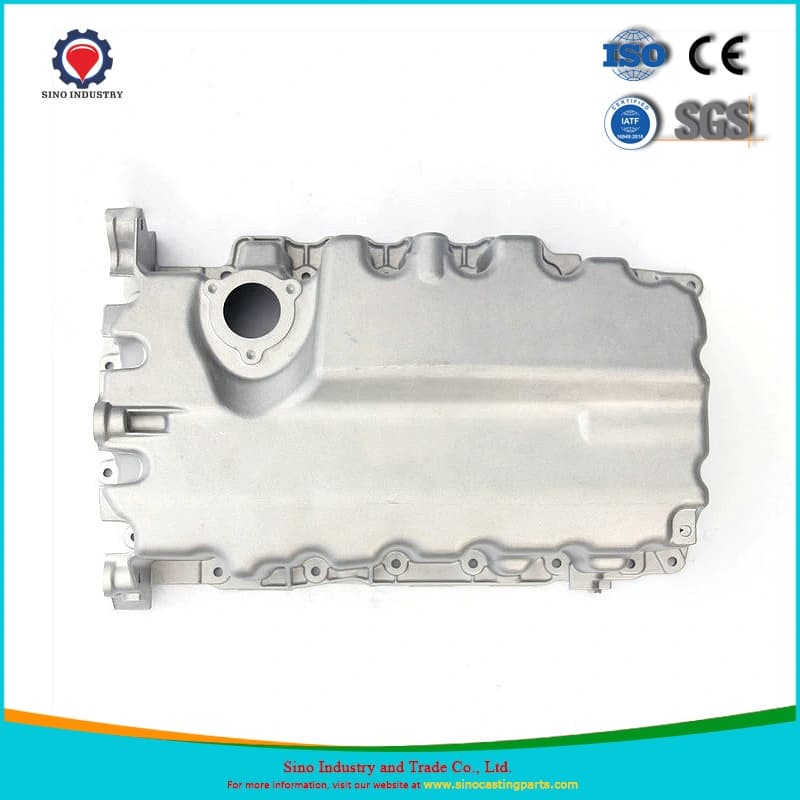
Warpage poses a serious reality in dual-process manufacturing. Dimensional distortion represents the most common failure point. Removing material alters the internal stress equilibrium. Aluminum holds immense energy after emerging from a heavy press. As the endmill removes the outer skin, the internal core releases tension. This sudden release causes the part to warp out of tolerance. You might machine a perfectly flat mating face. An hour later, the part bows several thousandths of an inch. We call this phenomenon "stress relieving in the cut." It destroys part yields rapidly.
Risk mitigation relies heavily on meticulous heat treatment protocols. Parts must undergo proper stress relief before final precision machining begins. A T6 thermal cycle remains mandatory for most structural alloys. This process involves solution heat treating followed immediately by artificial aging. Solution heat treating dissolves alloying elements evenly. Artificial aging precipitates them out to increase hardness. Performing this step stabilizes the atomic structure. It effectively locks the geometry in place. Skipping the T6 cycle guarantees unacceptable warpage during milling.
Fixture design also presents a unique engineering challenge. Standard vise grips easily hold rectangular billets. They cannot secure near-net shapes effectively. You need custom conformal workholding fixtures. These dedicated fixtures cradle the irregular geometry securely.
Consider the following best practices for workholding design:
Use soft jaws: Mill custom profiles into aluminum jaws to match the forged contour exactly.
Implement hydraulic clamping: Apply even pressure across multiple points to prevent crushing the hollow sections.
Add vibration dampening: Utilize epoxy potting or adjustable jack screws beneath unsupported flanges.
Developing these setups requires a significant upfront engineering investment. However, this investment guarantees absolute precision for subsequent production runs. Attempting to save money on workholding always results in scrapped parts.
Determining manufacturing success relies on strict break-even analysis. Production volume dictates the optimal fabrication route. We evaluate two primary scenarios to guide your sourcing decisions effectively.
First, examine low-volume production scenarios. This tier typically spans from a single prototype up to 500 parts. Billet machining usually remains much more economical here. You face zero upfront die costs. You simply load raw bar stock into the machine and begin cutting. The higher per-piece machining cost makes financial sense. You avoid paying tens of thousands of dollars for custom tooling. Rapid iteration remains possible. If the design changes, you simply update the G-code.
Next, evaluate mid-to-high volume runs. This tier includes batch sizes exceeding 1,000 parts. The manufacturing economics flip completely at this scale. Milling a near-net shape drastically reduces active spindle time. You remove significantly less material per cycle. Your machine tools run much faster. You generate far less scrap metal. These combined operational savings quickly offset the initial die investment. Producing Aluminum Forgings becomes a highly profitable strategy. The per-piece price drops dramatically as volume scales upward.
To identify your exact break-even point, you must analyze material removal rates. Calculate the cost of the raw aluminum block versus the near-net blank. Factor in the hourly rate of your 5-axis machining center. In most heavy equipment scenarios, the hybrid approach wins easily after the first few hundred units.
Vendor consolidation proves crucial for long-term success. Fragmented supply chains introduce massive operational risks. Using separate vendors creates a dangerous liability gap. Imagine a scenario where a finished component fails final tolerance checks. The blame game begins immediately. The machine shop blames the blank supplier for excessive residual stress. The forging house blames the machinists for improper clamping techniques. You bear the cost of the dispute. Production halts completely.
You must know exactly what to look for in a unified manufacturing partner. Evaluate potential vendors based on strict capabilities. They should manage both heavy pressing and precision milling under one roof. Single-source responsibility eliminates the liability gap.
Use this numbered checklist during your vendor audit:
In-House Capabilities: Verify they own both the hydraulic presses and the multi-axis CNC centers.
CMM Inspection Routines: Inspect their metrology lab. They need strict Coordinate Measuring Machine protocols for inspecting raw blanks before milling starts.
Thermal Processing: Confirm they perform T6 heat treatment internally to control residual stresses.
Scrap-Rate Guarantees: Ask for transparent documentation outlining how they handle out-of-tolerance parts.
When sourcing custom aluminum forgings, demand comprehensive engineering solutions. Ensure the partner specializes in delivering turnkey CNC machined aluminum forgings. You do not want raw blanks dropped on your receiving dock. You need finished, inspected components ready for immediate line assembly. A true partner handles the entire transition from raw ingot to finished part seamlessly.
Machining aluminum blanks represents a highly reliable manufacturing route for complex equipment assembly. The dual-process approach bridges the gap between raw structural integrity and absolute dimensional precision. By starting with a near-net shape, you preserve continuous grain flow. By finishing with a CNC mill, you achieve the tight tolerances required for modern mechanical integration. You simply must manage residual stresses through proper heat treatment and careful fixture design.
Your next steps involve clear action items. We recommend engineering and procurement teams conduct an immediate Bill of Materials (BOM) review. Identify high-scrap billet components currently slowing down your spindle time. Flag any cast parts experiencing field failures due to porosity. These items stand as prime candidates for the forge-and-machine approach. Reach out to a consolidated manufacturing partner to request a formal break-even analysis today.
A: No, provided the machining only targets mating surfaces and non-critical structural areas. The core strength derived from the forged grain flow remains intact. Engineers program toolpaths to avoid severing internal stress-bearing lines.
A: Machining a forging can achieve the exact same tight tolerances as billet machining (often up to ±0.0005 inches or ±0.012 mm), depending on the equipment and thermal stability of the part.
A: Generally, a machining allowance of 0.060" to 0.125" (1.5mm to 3mm) is designed into the forging to allow the CNC tools to clean up the surface and hit final dimensions.


