
Views: 0 Author: Site Editor Publish Time: 2026-08-21 Origin: Site


Specifying ductile iron on an engineering blueprint easily solves complex mechanical design challenges on paper. Engineers frequently rely on its theoretical tensile strength and exceptional impact resistance to build robust structural components. It often replaces expensive, heavy steel forgings in earthmoving machinery and automotive applications. However, achieving those exact mechanical properties in a physical part depends entirely on flawless foundry execution.
Gray iron easily forgives minor process variations during the pouring and cooling stages. In stark contrast, Ductile Iron Casting demands highly precise metallurgical control to succeed. Treating these two very different materials identically leads to severe structural failures. It also wastes significant procurement budgets and stalls critical production timelines.
This article serves as a comprehensive and practical buyer’s guide. You will understand the hidden implementation risks of casting ductile iron components. We will explore exactly how to evaluate a foundry's internal process controls before you ever award a contract. By the end, you will know precisely what separates a highly capable casting partner from a dangerous, high-risk supplier.
Ductile iron’s mechanical advantages (tensile strength, elongation) rely on a highly unstable nodularization process that requires strict time and temperature controls.
The material has a higher volumetric shrinkage rate than gray iron, necessitating advanced gating and risering designs to prevent internal porosity.
Evaluating a foundry for ductile iron casting requires verifying their in-house metallurgical testing, process repeatability, and scrap-reduction methodologies.
Selecting a foundry based solely on cost often results in hidden expenses downstream, including excessive tool wear during machining or catastrophic part failure due to inadequate nodularity.
Buyers often assume they can purchase ductile components just like standard gray iron. This dangerous assumption causes immediate procurement failures. When foundries treat ductile iron casually, they heavily compromise the structural integrity of the final part. It requires an entirely different operational mindset to manufacture safely and consistently.
The core difference lies deep within the microstructure. Foundry operators must force the graphite to grow into spheres, or nodules, rather than sharp flakes. Sharp graphite flakes inherently act as internal stress concentrators. They create microscopic fault lines where sudden cracks easily propagate under heavy loads. This critical transformation into spheres requires highly precise magnesium additions to the molten base iron. The magnesium fundamentally alters the graphite's growth pattern during the solidification phase. These resulting nodules give the material its signature elasticity, toughness, and high yield strength.
However, this essential magnesium treatment introduces major process risks. Magnesium remains highly volatile and reacts violently when introduced to the liquid melt. It is also incredibly time-sensitive. If the foundry delays the pouring process for even a few minutes, the magnesium effect quickly fades away. Industry experts call this common phenomenon "magnesium fade." When fade occurs, the graphite immediately reverts to a weak flake structure. You ultimately end up buying a brittle gray iron part disguised as a premium ductile component.
Temperature windows further complicate the entire casting process. Foundries must pour the molten metal within a very narrow and strictly monitored thermal range. If the metal temperature drops too low, the iron will not fill the complex mold cavities properly. If the melt gets too hot, the active magnesium burns off far too rapidly. Strict temperature adherence ultimately dictates the overall success of the microstructural formation.
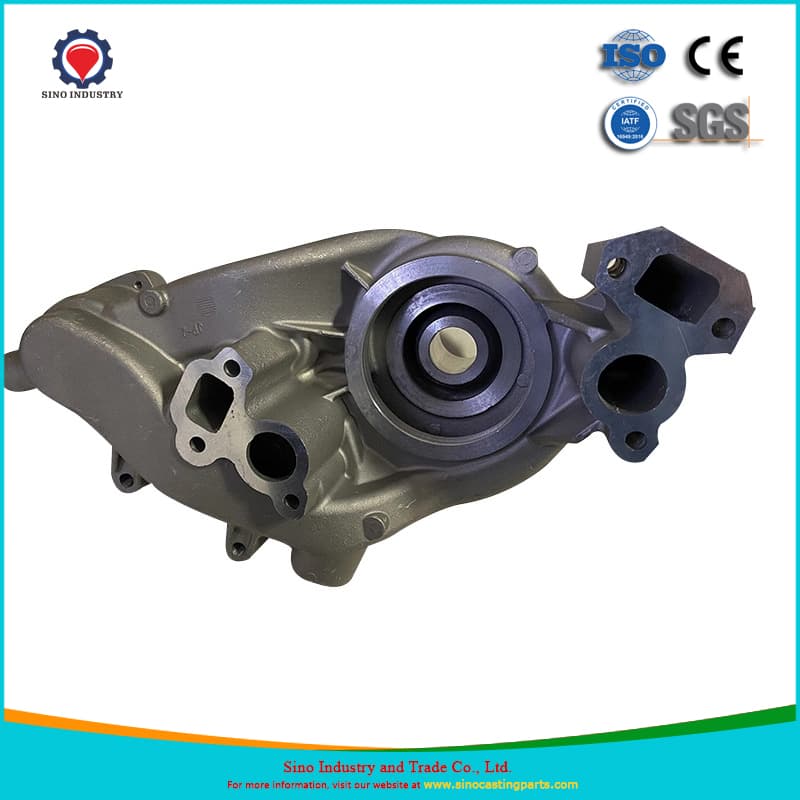
Competent foundries actively employ specialized practices to counteract these natural casting challenges. They cannot rely on basic gravity pouring techniques. Instead, they build robust, engineered process controls into every single production step. We will break down these highly specialized methodologies below.
Ductile iron exhibits a massive volumetric shrinkage tendency as it transitions from liquid to solid. To address this severe shrinkage, engineers must design advanced gating and risering systems. These specialized feeding mechanisms ensure a continuous, uninterrupted supply of molten metal. Proper fluid flow controls actively prevent shrinkage cavities from forming deep inside the thick part walls. Without them, you risk severe internal porosity. A properly engineered gating system typically includes:
Pouring basins designed specifically to minimize turbulent metal flow and reduce air entrapment.
Tapered sprues used to control the downward velocity of the molten iron accurately.
Choke mechanisms integrated to filter out harmful slag and non-metallic inclusions before they enter the mold.
Strategically placed risers engineered to feed hot liquid metal into isolated cooling sections.
Inoculation represents another highly critical defense mechanism. Foundries introduce specific ferrosilicon alloys into the melt right before the pouring phase begins. We refer to this exact practice as late-stage inoculation. It provides crucial nucleation sites for the graphite to grow around. This vital step ensures a uniform, high nodule count throughout the entire part. More importantly, it actively prevents chill. Chill refers to exceptionally hard carbide formations forming in thin sections of the casting. Carbides make the metal extremely brittle and practically impossible to machine efficiently.
Finally, the physical sand molds demand extra engineering attention. Solidifying ductile iron creates intense internal expansion forces. The graphite nodules actually expand in volume as they precipitate out of the liquid. High-pressure, extremely rigid sand molds must properly contain these massive forces. If the mold walls yield or flex, the casting suffers from severe dimensional distortion. This unwanted expansion will also cause secondary porosity defects throughout the component.
Chart: Casting Process Requirements Comparison
Process Parameter | Standard Gray Iron | Ductile Iron |
|---|---|---|
Microstructure Goal | Graphite flakes (natural formation) | Graphite nodules (forced formation) |
Magnesium Treatment | Not required | Strictly mandatory and highly time-sensitive |
Volumetric Shrinkage | Low to moderate | Extremely high, requiring large feeding risers |
Mold Rigidity | Standard green sand is often sufficient | High-pressure molding strictly required |
Temperature Control | Forgiving pouring windows | Narrow, strictly monitored thermal ranges |
You cannot simply look at a finished casting's exterior to determine its internal quality. Evaluating a foundry requires a deep, comprehensive dive into their internal testing protocols. These specific tests verify if their specialized casting practices actually worked as intended.
Foundries must strictly evaluate the metal's microstructure before shipping any product to your facility. Technicians use advanced optical microscopy to inspect the graphite formations. They precisely measure the exact nodularity percentage and the total nodule count per square millimeter. A high-quality component always requires a mostly spherical graphite structure. If they skip this verification step, critically flawed parts easily slip directly into your supply chain.
Chemical composition also requires real-time verification directly on the foundry floor. Expert operators use advanced spectrometry equipment to confirm the exact alloy breakdown. Thermal analysis tools actively monitor the cooling curves of the liquid molten metal. These live, immediate feedback loops allow technicians to adjust the chemistry rapidly before they pour a single physical mold.
Visual inspections completely miss internal structural flaws. Therefore, non-destructive testing (NDT) remains strictly mandatory for quality assurance. Ultrasonic testing shoots high-frequency sound waves through the solid metal to detect hidden subsurface shrinkage. Magnetic particle inspections quickly reveal microscopic surface cracking invisible to the naked eye. You must firmly insist on these rigorous procedures for any critical structural components.
Procurement teams constantly face a tough challenge when shortlisting potential casting partners. You need highly actionable criteria to separate skilled engineering foundries from basic commodity suppliers. Look for specific, verifiable indicators of metallurgical expertise during your vendor audits.
Simulation Software Adoption: Top-tier foundries extensively utilize solidification simulation software like MAGMASOFT. They digitally predict cooling rates and easily identify potential defect locations before cutting any expensive physical tooling. This proactive digital approach resolves potential structural issues extremely early in the development cycle. It saves months of wasted trial-and-error testing.
Traceability and Certification: Strict heat-lot traceability remains an absolute non-negotiable requirement. You should request detailed material test reports (MTRs) for every single production batch you purchase. Comprehensive ISO certifications prove the foundry maintains standardized, highly rigorous quality management systems.
Machinability Feedback Loops: Specialized foundries also actively monitor the overall hardness of their poured castings. They create continuous feedback loops regarding subsequent machinability. This crucial step prevents unexpected hard spots or dense carbides from reaching your facility. Hard spots will instantly destroy your expensive CNC machining tooling.
Table: Common Defect Mitigation Strategies
Common Defect | Root Cause | Foundry Mitigation Strategy |
|---|---|---|
Shrinkage Porosity | Inadequate metal feeding during solidification | Simulate and implement advanced gating and oversized risering systems. |
Carbide Formation (Chill) | Rapid cooling in thin sections; poor inoculation | Apply precise late-stage ferrosilicon inoculation before pouring. |
Flake Graphite | Magnesium fade due to delayed pouring times | Enforce strict time limits between magnesium treatment and final pour. |
We must deliberately shift our focus from basic technical requirements to direct business impacts. Minor lapses in daily foundry process control create massive downstream financial consequences. Selecting a casting partner based solely on the lowest initial piece price guarantees future trouble.
Poor metallurgical quality introduces devastating hidden costs into your manufacturing process. Inadequate nodularity directly spikes your internal scrap rates. When parts unexpectedly fail during routine machining, you immediately face severely delayed production lines. You also pay heavily for expensive rework and entirely wasted labor hours. These downstream, hidden expenses quickly erase any initial savings gained from a cheap casting quote.
The physical application risks remain even more alarming for engineers. Imagine a critical structural component suddenly failing in heavy earthmoving machinery or automotive steering systems. If undiscovered flake graphite exists in a supposedly ductile part, it snaps violently under pressure. This catastrophic mechanical failure creates severe liability and massive safety implications for your entire brand.
Protect your supply chain operations by taking careful, calculated steps. Always request a comprehensive process audit before officially signing any long-term supplier contracts. Alternatively, run a small pilot batch demanding extensive NDT documentation and microstructural proof. Do not move straight into high-volume production runs until you thoroughly vet the new supplier.
Ductile iron casting is far from a simple, everyday commodity process. It remains a highly engineered metallurgical procedure requiring absolute physical precision. Foundries must completely master temperature controls, complex magnesium treatments, and highly rigid mold making.
You must actively align your business with a foundry prioritizing exceptional quality. A partner heavily investing in specialized tooling and advanced analytical testing mitigates your long-term supply chain risks. They actively protect your brand reputation by consistently delivering reliable, strong components that perform flawlessly in the field.
Take decisive action today to safeguard your critical product designs. Consult a specialized casting engineer to review your CAD files thoroughly for manufacturability (DFM). Always demand a detailed, written process control plan before your very next production run begins.
A: Industry standards typically require an 80% to 90% minimum nodularity. The exact percentage depends heavily on the specific ASTM or ISO grade you specify. Critical structural components often demand higher nodularity to guarantee maximum tensile strength and elongation. Foundries verify this vital metric using microscopic analysis before shipment.
A: Excessive tool wear usually stems from the formation of hard carbides, also known as chill. This defect occurs due to poor late-stage inoculation practices or improper cooling rates in thin sections. The resulting hard spots aggressively degrade CNC cutting tools, significantly slowing down your machining operations.
A: Simulation software significantly reduces risks and minimizes expensive physical tooling iterations. It helps engineers optimize gating and risering digitally. However, it cannot guarantee a flawless part on its own. Strict physical process control and expert execution on the foundry floor remain absolutely mandatory for success.
A: Ductile iron experiences a much higher volumetric shrinkage rate during solidification. As the graphite forms into spheres, it creates intense internal expansion forces followed by rapid contraction. This unique mechanic requires highly robust risering systems and rigid sand molds to feed molten metal continuously and prevent shrinkage cavities.


